






















Four founding decisions made under colonial-era constraints that turned out to be exactly the right ones for a rising Indian consumer class.
DS Group India was founded in 1929 in Chandni Chowk, the commercial nerve centre of pre-independence India and one of undivided India’s most active wholesale and retail corridors. Chandni Chowk was a place where consumer tastes in fragrance, tobacco and mouth fresheners were highly developed, but brand identity was almost absent.
Starting as a small fragrance and mouth freshener business, DS Group has transformed into a multi-business enterprise thanks to the joint leadership of Shri Dharampal 'Sugandhi' and Shri Satyapal 'Sugandhi'. DS Group has now grown into one of India's leading FMCG conglomerates with a turnover of over ₹10,000 crore and a portfolio spanning mouth fresheners, spices, confectionery, hospitality, dairy, agri business, and luxury retail.
In 1929, India was a colonial economy with no formal FMCG distribution infrastructure. Consumer goods like salt, spices and fragrance products were traded by weight and vendor familiarity, not by brand. There were no national retail chains, a packaged-goods culture, or established consumer trust in any branded product at scale.
In that environment, any consistently high-quality offering could lead the category. There was no incumbent brand to displace, just a gap to fill and a consumer base whose purchasing decisions were made entirely on sensory trust. However, while consumer preferences and tastes were well established, the concept of brand identity was almost absent.
That gap between developed taste and the absence of trusted, recognisable brands created a unique market opportunity. It was this opportunity that laid the foundation for DS Group’s journey.
Shri Dharampal 'Sugandhi', 1 January 1901 - 23 June 1964: The Quality Instinct That Started It All
Shri Dharampalji's founding contribution was consumer understanding and expertise in delivering quality. The decision was to ensure that the product would be consistent, honest and better than the market expected.
In a market where adulteration was common and consumer redress was nonexistent, Shri Dharampalji made quality a personal standard rather than a regulatory requirement. Consumers did not buy from a company. They bought from a person whose name was his promise.
Shri Satyapal 'Sugandhi' 14 August 1929 - 4 December 1995: The Expansion Instinct That Built a Group
Shri Satyapalji built on his father's quality foundation and expanded its institutional breadth. He formalised the company structure, moving from a family business to a dual-category enterprise.
The launch of Rajnigandha Pan Masala under Shri Satyapalji’s tenure marks the transition from a shop with consistent quality to a branded consumer goods company. The first time the Sugandhi quality reputation was attached to a named, packaged and marketed product.
The founding-era decisions of the DS Group India conglomerate were selections from a set of possible strategies, each of which created a constraint that became a strength. Four of them can directly be traced to the current business.
Fragrances and mouth fresheners are sensory products that create habitual, emotionally indexed loyalty that rational product categories rarely match. Recognising this early gave DS Group an unusually nuanced understanding of consumer behaviour. This understanding would later influence every category the group expanded into, from confectionery and spices to luxury retail and hospitality.
A prime example of this strategy's success is Rajnigandha. Rajnigandha has been a category leader for decades without needing to discount or reposition, because category loyalty in mouth fresheners is sensory and habitual.
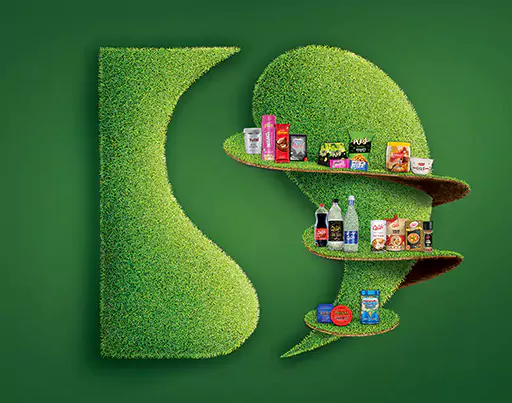
The same logic explains the expansion into spices, where Catch Spices built its foundation around taste, aroma, and kitchen rituals, later broadening its portfolio with premium offerings like Catch Origins, Catch Grinders, the Table Top range, and its foray into bottled water with Catch Water. Beyond spices, this sensory-driven strategy powered the group's diversification into confectionery (Pass Pass Pulse candy - the famous tangy-surprise core that made it a cultural talking point), dairy (Ksheer - taste and freshness), and luxury food (L'Opéra - French culinary artistry as a fully sensory experience).
The founders used Chandni Chowk's wholesale networks to distribute before building a proprietary system. There was no capital for a distribution army, and by the time DS Group built its own network, it understood the terrain at a level no market-entry analysis could have produced.
The long-term result of that patient approach is now one of the deepest and most successful FMCG distribution networks in India. The manufacturing and distribution network that the founding constraint produced is now a structural moat.
Giving back to society has always been an integral part of DS Group’s philosophy. From its earliest days, the business believed that long-term success and community well-being go hand in hand. This principle continues to guide DS Group’s growth and social initiatives.
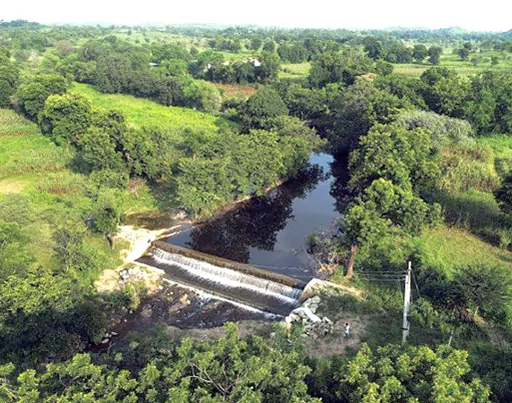
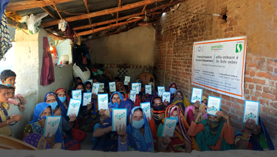
For DS Group, community engagement has evolved alongside the business itself. The group’s water conservation initiatives across six states and livelihood programmes spanning ten states reflect a principle embedded since its earliest years in Chandni Chowk: sustainable enterprise is built on long-lasting community trust.
Under the leadership of Chairman Ravinder Kumar and Vice Chairman Rajiv Kumar, DS Group continues to pursue accelerated diversification with an unwavering commitment to quality. This is a modern expression of the same values on which the company was founded nearly a century ago. The business is far larger today, but its core approach remains the same.
What started in 1929 as a small fragrance and mouth freshener shop in Chandni Chowk has grown into a ₹10,000+ crore conglomerate spanning 9 business verticals. At its heart, the story of DS Group is the story of four early decisions made during the colonial era that proved perfectly suited to the needs and aspirations of India’s growing consumer class.
| Business Vertical | Key Brands |
| Food & Beverages | Catch (spices including whole, straight, blends, pastes, and sprinklers; beverages), Kewal, Not Just Nuts, Pulse Natkaare, Snack Factory, Liquid Life |
| Confectionery | Pulse, Pass Pass, LuvIt, Rajnigandha Silver Pearls, Chingles, FRU, Golmol, Tulsi Royal Khajoor Plus, BABA Elaichi |
| Mouth Fresheners | Rajnigandha, BABA Supari, BABA Black Supari, Tansen Supreme, Mastaba, Tulsi Imperial 1979 |
| Dairy | Ksheer, OvinO |
| Hospitality | Namah - Radisson Individuals, Nainital; Namah - Radisson Individuals, Jim Corbett; Radisson Blu, Guwahati; Intercontinental Jaipur Tonk Road, an IHG Hotel - Intercontinental Jaipur; Holiday Inn Express Kolkata Airport; The Renaissance Bengaluru Race Course Hotel - The Renaissance, Bengaluru |
| Luxury Retail | Le Marche, L’Opéra, Ben’s Cookies |
| Agri | Birthright (garden centre, hydroponics), DS Agri |
| Others | Unitexx (rubber thread), Canpac (packaging), Flexible Packaging (packaging), Infrastructure |
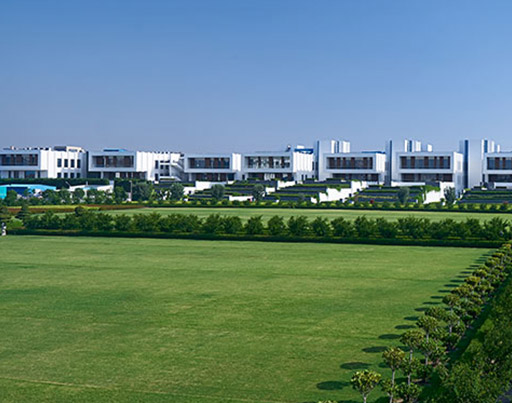
DS Group’s sustainability standards are independently audited, measurable and verifiable at source, reflecting the same commitment to consistency and quality that shaped the company from its inception. The group’s headquarters in Noida is LEED Platinum certified under USGBC v4 O&M, with one of the highest credit scores globally in its category. It also holds LEED Zero Carbon certification for achieving net zero carbon from energy use and occupant transportation.
Beyond its headquarters, DS Group’s sustainability efforts span water conservation, governance and environmental accountability at scale. The group is certified Water Positive by the GRIHA Council across 30 locations in India, with a water positivity index of 1.8, and its Water Efficient Zone project received the National Water Award from the Ministry of Jal Shakti in 2020.
DS Group was founded in 1929 in Chandni Chowk. The group later expanded into a multi-category enterprise and is now headquartered in Noida, Uttar Pradesh, with over 95 years of continuous operations.
DS Group began in Chandni Chowk with fragrance and mouth freshener products, operating under the "Sugandhi" identity. Early products included mouth fresheners and tobacco offerings such as BABA, while Rajnigandha later became the group's flagship category-leading brand.
DS Group was founded by Shri Dharampal 'Sugandhi' and later joined by Shri Satyapal 'Sugandhi.' Together, they expanded the business into a diversified conglomerate. Today, DS Group is led by Chairman Ravinder Kumar and Vice Chairman Rajiv Kumar.
DS Group operates across FMCG, confectionery, dairy, hospitality, luxury retail, and agriculture businesses. Its portfolio includes Rajnigandha, Catch Spices, Pulse Candy, Rajnigandha Silver Pearls, Ksheer, L'Opéra, and Namah Resorts, with turnover exceeding INR 10,000 crore.
Yes. DS Group is the abbreviated name of Dharampal Satyapal Group, named after the founders Shri Dharampal 'Sugandhi' and Shri Satyapal 'Sugandhi.' The initials "DS" stand for Dharampal Satyapal. The group is headquartered in Noida, Uttar Pradesh.
Among Indian-origin FMCG companies founded before independence, DS Group, established in 1929, is one of the oldest under continuous Indian family ownership.
DS Group owns and manages Indian and international brands across FMCG, luxury retail, and hospitality categories. Major brands include Rajnigandha, Catch Spices, Pulse Candy, Rajnigandha Silver Pearls, Ksheer, L'Opéra, and Namah Resorts.
Explore DS Group's History: From a 1929 Chandni Chowk shop to India's leading FMCG conglomerate and the people and decisions that built it.