






















Quick commerce has changed the way people buy candy in India. Think about it. Most people never planned to buy a packet of candy during their weekly grocery shopping. They bought it on impulse. Maybe while waiting at the billing counter, collecting change at a local kirana store, or walking past a shelf filled with colourful treats. A small craving turned into a quick purchase.
Today, those moments have moved online. With quick commerce apps like Blinkit, Zepto, and Swiggy Instamart, impulse buying happens on a smartphone rather than at the checkout counter. While ordering groceries, people often add a packet of candy to their cart, whether it‘s to satisfy a sudden craving, reach the minimum order value, or simply because an attractive product pops up on the screen.
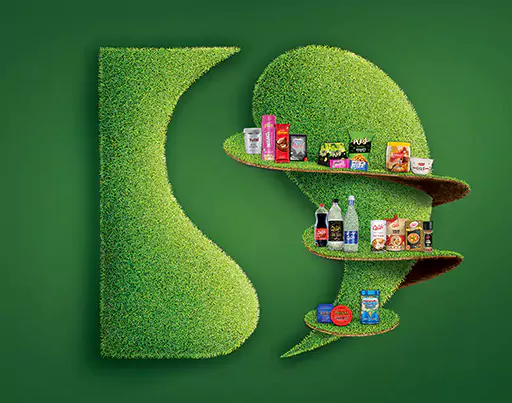
DS Group is capitalising on this shift, growing at the same rapid pace as the quick commerce sector itself. By ensuring top-of-mind visibility across digital dark stores, iconic offerings from DS Group are leading the digital impulse movement.
In the retail market, an impulse purchase is any purchase that a shopper makes without prior planning. It is a sudden, often on-the-spot decision driven by seeing a product at the right place and the right time.
Candy is the absolute textbook example of an impulse category. If you look closely at traditional retail psychology, confectionery succeeds because of three distinct pillars:
Because of these factors, candy has historically bypassed planned demand. Shoppers rarely set out with a list intending to buy a single stick of gum. Rather, the immediate retail environment coaxes them into it.
Over the past few years, India’s retail landscape has experienced a massive shift due to quick commerce. What started as an experimental service delivering milk and bread in 10 to 15 minutes has transformed into a dominant shopping habit across major cities.
India‘s quick commerce market has grown rapidly. India‘s digital commerce market is estimated to reach ₹8 lakh crore in 2026, while the quick commerce segment is projected to touch ₹1.08 lakh crore, registering a 40% year-on-year growth. This is more than twice the growth rate of the broader digital commerce market.
Apps like Blinkit, Zepto, and Instamart have succeeded because they tapped into a core human desire: absolute convenience. Driven by a massive network of local dark stores (micro-warehouses hidden inside residential neighbourhoods), these platforms have made waiting for deliveries completely obsolete. DS Group has aligned its distribution strategy with these dark store networks, matching this explosive growth rate across platforms.
When retail moved online a decade ago, many experts believed impulse buying would die. Traditional e-commerce websites, with their multi-day delivery timelines, killed the thrill of instant gratification. No one wanted to buy a single piece of Indian candy and wait two days for it to arrive.
Quick commerce solved this problem by digitally rebuilding the physical checkout counter through smart User Experience (UX) design. When you review your digital cart on Blinkit or Zepto, the app does not just show your total amount. This digital checkout counter is where DS Foods shines.
Whether it‘s the legendary tangy burst of Pass Pass Pulse (in Kaccha Aam, Guava, Orange, Pineapple, or Litchi), the bite-sized explosion of Pulse Shots, the nostalgic tamarind punch of Pulse Golmol, or the chewy delight of FRU Juicy Jelly, these products sit at the very top of cart-recommendation widgets. For shoppers seeking chocolate treats or refreshing mouth fresheners, products like LuvIt Chocolates, Pass Pass Chingles mini gums, traditional Pass Pass mixes, and premium Rajnigandha Pearls serve as the ultimate digital checkout add-ons.
Furthermore, the economics of small-basket deliveries actively encourage these purchases. If your cart total is ₹180, and the free-delivery threshold is ₹199, your brain immediately looks for a cheap way to bridge the gap. A ₹20 pack of chewing gum or a tangy candy becomes the perfect, frictionless solution.
The app successfully mimics the old kirana store clerk handing you candy instead of loose change.
The transition to digital apps has dramatically changed how consumers behave.
First, the timing of the impulse has shifted. In a physical store, you are exposed to impulse triggers only when you physically walk inside. On a quick commerce app, you are exposed to them multiple times a day, whether you are ordering morning milk, afternoon office snacks, or late-night dinners.
Second, our shopping baskets look entirely different. Instead of doing one massive, planned monthly grocery run, urban Indians now place multiple small orders throughout the week. Because the barrier to ordering is so low, people make spontaneous purchases far more frequently.
You no longer need to wait in a physical queue to be tempted. The algorithm knows exactly when you are most likely to crave a sweet treat. Whether someone is craving a tangy treat during work hours or an after-meal mouth freshener at night, DS Group’s portfolio is accessible on demand.
Quick commerce has changed not only how people buy candy but also how brands sell it. To succeed on platforms like Blinkit, Zepto, and Swiggy Instamart, candy companies have had to rethink their approach.
Earlier, brands wanted their products placed near the billing counter because that‘s where most impulse purchases happened. Today, that shelf has moved online. DS Group has strategically captured top banner placements, search keywords, and "frequently bought together" carousels for flagship brands like Pass Pass Pulse, LuvIt, and FRU. Dominating prime digital screen real estate ensures that when users search for snacks or checkout add-ons, DS Group‘s products appear instantly.
Small ₹1 or ₹5 single candies work well in local kiranas, but they are not practical as standalone quick-commerce deliveries. DS Foods adapted rapidly by rolling out multi-packs, zipper pouches, and family jars across its brands, including Pulse Shots, Pass Pass Chingles, and FRU Juicy Jelly. These larger formats provide better unit economics for dark stores while delivering high value to consumers seeking to stock their home pantries.
In the past, launching a new flavor across India could take months due to traditional distributor channels. With quick commerce, DS Foods leverages dark stores to deploy innovations rapidly. Recent launches like Pulse Golmol (Imli Goli) and specialized LuvIt chocolate ranges can be stocked in dark stores across major metros within days, capturing instant consumer feedback and driving immediate trial.
As quick commerce infrastructure expands out of metro areas and moves into Tier-2 and Tier-3 cities, the nature of spontaneous shopping will keep evolving. We are moving toward a retail environment in which supply instantly rises to meet consumer demand.
For the confectionery sector, this means the digital space is no longer just a secondary sales channel. It is becoming the primary arena for growth. By growing in tandem with quick commerce platforms, DS Group continues to solidify its market share. Through targeted digital nudges, optimized packaging formats, and continuous product innovation across Pass Pass Pulse, LuvIt, FRU, Chingles, and Rajnigandha Pearls, DS Group is setting the benchmark for digital impulse buying.
Quick commerce has successfully rebuilt the classic impulse-buying moment that was once completely controlled by physical checkout counters and neighbourhood kirana shops. Candy, by its very nature as a low-cost, high-frequency choice, rests perfectly at the centre of this digital transformation. As on-demand delivery apps become deeply woven into our daily lives, the screen will continue to be the primary place where India‘s sweet cravings are triggered, managed, and instantly satisfied.
Impulse buying is the act of purchasing an item spontaneously without any prior planning. Candy is a perfect fit for this behaviour because it is inexpensive, visually appealing, placed right at the checkout counter, and provides an instant emotional reward the moment you eat it.
These platforms have moved the impulse moment from the physical shop counter to the mobile screen. By delivering orders in under 15 minutes, they have enabled consumers to buy candy online on impulse and receive it almost immediately, keeping the feeling of instant gratification alive.
Yes, the underlying psychology is identical, but the tools are digital. Physical stores use eye-level product placement near the cash register. Quick commerce apps use smart algorithms and cart-page carousels to highlight impulse favorites like Pass Pass, Chingles, and Rajnigandha Pearls right before checkout.
Absolutely. Because delivering single pieces of tiny candy is difficult for dark stores, brands are increasingly focusing on multi-serve packs, small boxes, and premium pouches. It also allows brands to test new experimental flavours and launch them to consumers much faster than traditional retail networks allow.